About Thomas & Martha Jefferson
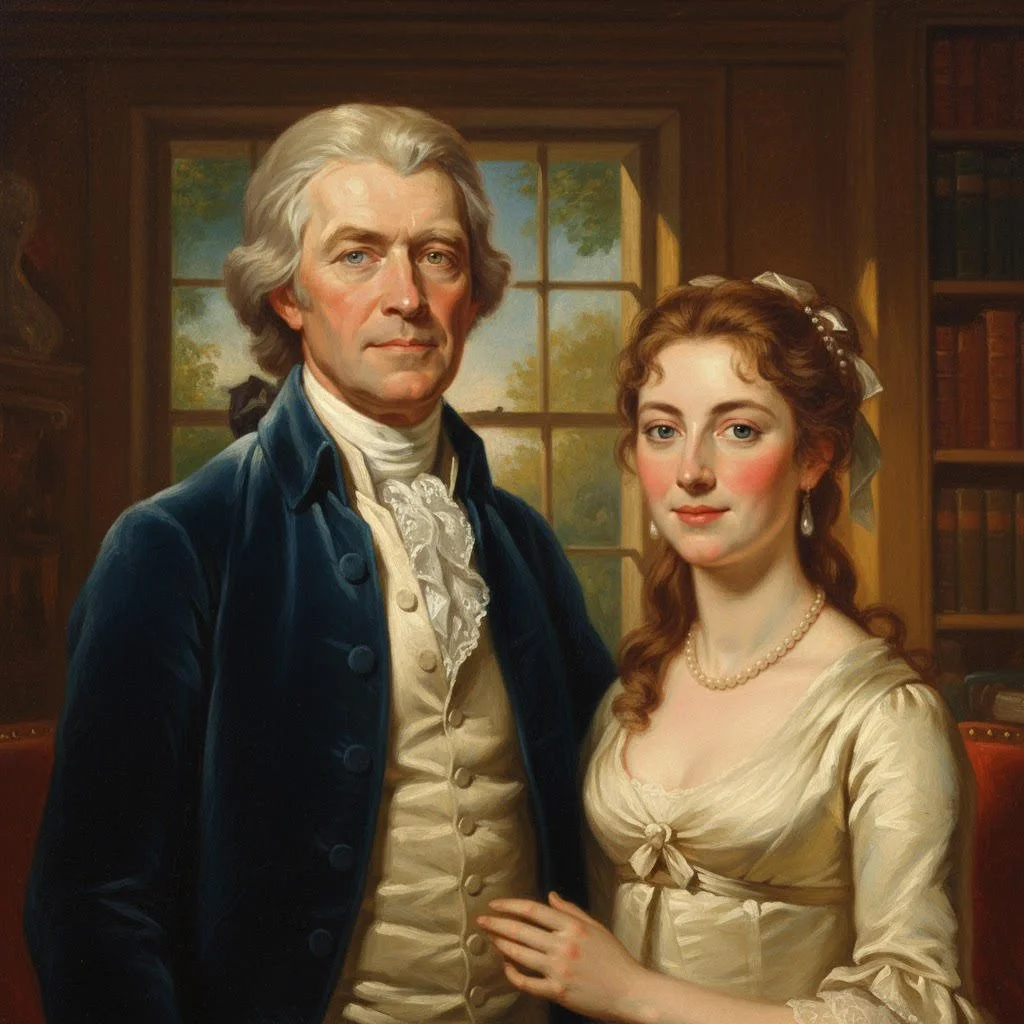
A Union of Hearts and Harvests
While history remembers Thomas Jefferson as a statesman, his heart belonged most fully to his wife, Martha Wayles Skelton Jefferson, and the life they built together at Monticello. Theirs was a romance rooted in a profound shared sensibility; they were intellectual equals who found their greatest joy in the privacy of their home. As man and wife they first arrived at Monticello on New Year’s Day 1772, traveling a hundred miles in a blizzard so severe they had to abandon their carriage and make their way on horseback. The main house was not yet built so they stayed in a small outbuilding - today known as the Honeymoon Cottage - where they discovered "part of a bottle of wine, found on a shelf behind some books," and it served as both “fire and supper.”
At the center of their domestic life was a shared passion for food and wine that was decades - if not hundreds of years - ahead of its time. Thomas and Martha understood that civilization begins at the table. Their Monticello garden was replete with hundreds of varieties of vegetables and fruits, as they experimented with seeds from around the world to find what thrived in American soil. They believed in the honest pleasure of a well-cooked meal and good bottle of wine, championing a "farm-to-table"-like philosophy long before it had a name. Most importantly, they saw fine food and wine not as aristocratic luxuries, but as the natural rewards of hard work and good stewardship.
This dedication to agriculture was inseparable from Thomas Jefferson’s vision for a free and prosperous America. He believed that the "cultivators of the earth" were the most virtuous citizens because they were the most independent - reliant on their own industry rather than the whims of the state. His advocacy for limited government was born from the conviction that free people, left to regulate their own pursuits and trade the fruits of their labor without excessive interference, would build a nation of boundless potential. While the nation that he worked so hard to establish struggles today, we continue to believe in Tom and Martha’s vision, to the point that we named our sauces after them.
(A note on the image seen above: Martha Jefferson died at the age of 33 from complications that occurred after childbirth. While it is thought that she posed for several portraits, none of them have survived, and we don’t know exactly what she look liked. The image you see on this page was created by AI after being given several descriptions of Martha’s appearance as written in the letters and journals of her family and friends, but it is, at best, a solid guess. The images of Martha seen our hot sauce labels - many of which feature her with white hair - are intended to be cartoonish and fun, but are obviously inaccurate).